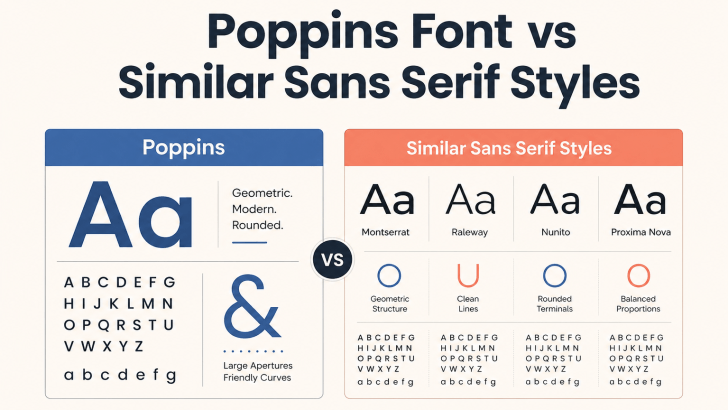
Poppins Font vs Similar Sans Serif Styles

Comparing Poppins font vs similar sans serif styles can help designers decide whether to keep a familiar geometric look or move toward a more distinctive visual identity. Poppins is popular for its clean shapes, balanced proportions, and flexible weights, but many modern sans serif fonts offer a similar sense of clarity with different personalities. The …
Continue reading →

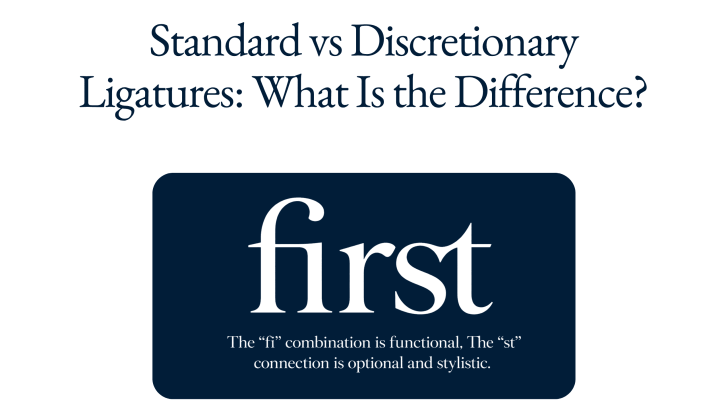
Standard vs Discretionary Ligatures: What Is the Difference?

Understanding standard vs discretionary ligatures can help designers make better typography decisions, especially when working with branding, editorial layouts, packaging, websites, and display type. Both types combine two or more characters into a specially designed glyph, but they serve different purposes. Standard ligatures mainly improve spacing and prevent awkward letter collisions, while discretionary ligatures are …

Continue reading →

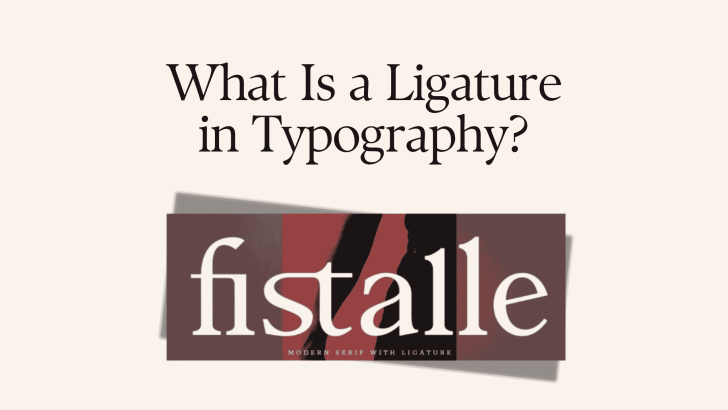
What Is a Ligature in Typography?

Understanding ligatures in typography can help designers create text that feels more polished, connected, and visually distinctive. A ligature is a special character created when two or more letters are combined into one glyph. Instead of displaying each letter separately, the typeface replaces certain combinations with a custom shape that improves spacing, appearance, or stylistic …

Continue reading →

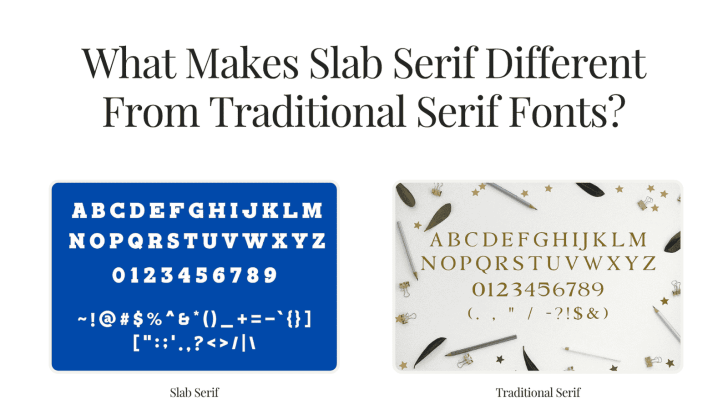
What Makes Slab Serif Different From Traditional Serif Fonts?

Understanding what makes slab serif different from traditional serif fonts can help designers choose typography with the right personality for branding, editorial layouts, packaging, websites, and advertising. Both styles belong to the serif family, but they communicate very different moods. Traditional serif fonts tend to feel refined and literary, while slab serifs often look stronger, …

Continue reading →

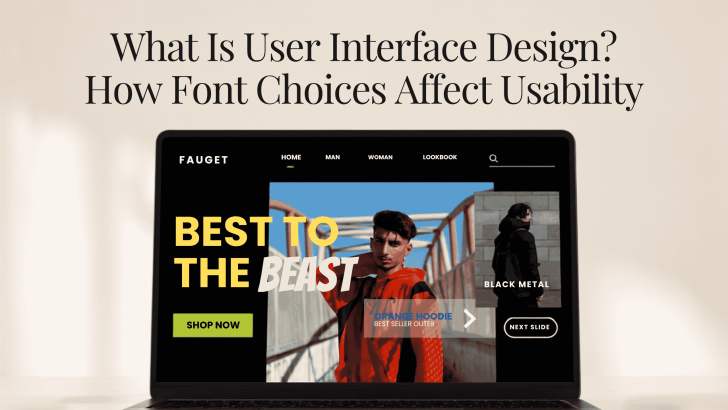
What Is User Interface Design? How Font Choices Affect Usability

If you are asking what is user interface design, the simplest answer is that it is the process of shaping how people interact with digital products through screens, controls, content, and visual elements. Buttons, menus, icons, forms, colors, spacing, and typography all work together to help users understand what to do next. Font choices are …

Continue reading →