Font licensing explained for commercial use before launching a logo is one of the most important considerations. A logo is not just a visual mark. It becomes part of your brand identity and appears on products, packaging, websites, ads, social media, and business documents. That means the font you use in your logo must be legally safe for commercial use.
Many business owners, designers, and creators focus on how beautiful a font looks. They check whether the font feels modern, elegant, bold, playful, or premium. However, they often forget one crucial step: checking the license. Before your logo goes public, you need to know whether the font allows commercial use, logo usage, modification, and long-term brand application.
Why Font Licensing Matters Before Launching a Logo
A logo is designed to represent a business for years to come. Once it is launched, it may appear everywhere, from your website header to printed merchandise. If the font license does not allow commercial use, your brand could face problems later.
Font licensing matters because fonts are creative products. Just like music, photography, or illustrations, fonts are protected by usage rights. Buying or downloading a font does not always mean you can use it for anything. Some fonts are free for personal use only, while others require a commercial license.
For logo design, this is especially important. A logo is usually used for business identity, marketing, and profit-related activities. That makes it commercial by nature.
What Is a Font License?
A font license is a legal agreement that explains how you are allowed to use a font. It tells you what you can and cannot do with the font file.
Some licenses are simple, while others are more detailed. A font license may explain whether you can use the font for print design, websites, apps, social media, products, packaging, or logos. It may also mention whether the font can be modified, embedded, or shared with a client.
Personal Use vs Commercial Use
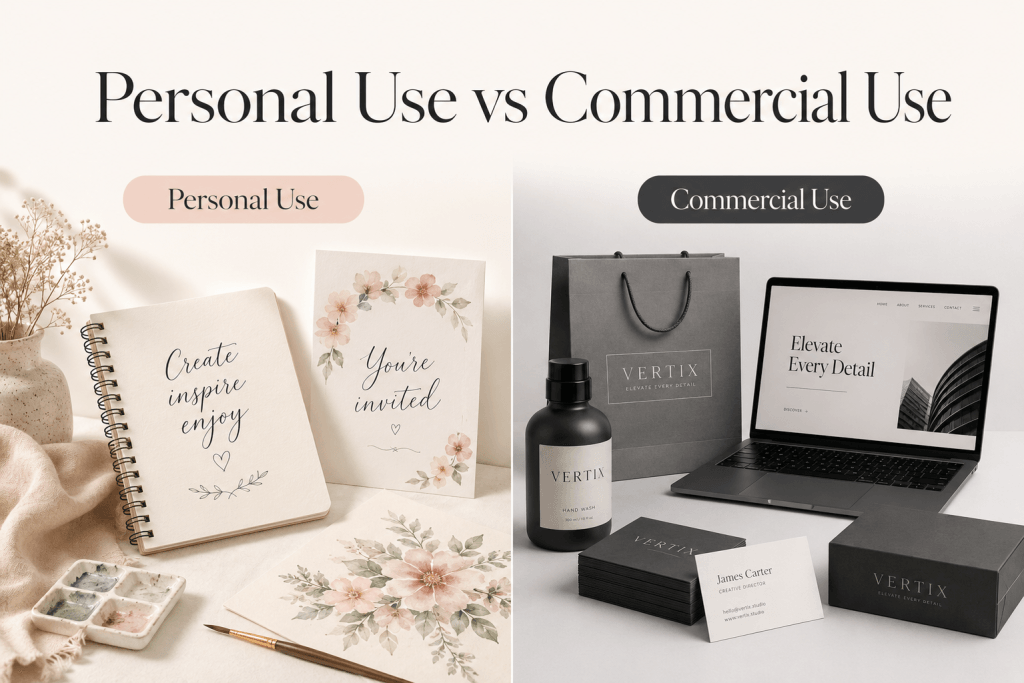
Personal use means the font is used for non-business purposes. For example, you might use a font for a school project, personal invitation, hobby design, or private social media post.
Commercial use means the font is used for business, promotion, sales, branding, or anything connected to earning money. A logo for a business, brand, product, store, agency, or creator account is usually considered for commercial use.
This is why a “free for personal use” font is not enough for a brand logo. Before launching your logo, make sure the license clearly allows commercial use.
Can You Use Any Commercial Font for a Logo?
Not always. This is where many designers make mistakes. A font may allow commercial use for graphics, posters, or social media designs, but logo usage may have different terms.
Some font licenses allow logo design without extra permission. Others may require an extended license, especially if the logo will be used by a large company, on products for sale, or across major advertising campaigns.
Before choosing a font, always read the license details carefully. Look for words such as “logo,” “brand identity,” “trademark,” “commercial project,” or “extended license.”
Check Whether the Font Can Be Modified
Many logos use customized typography. Designers may adjust letter spacing, edit shapes, connect letters, or turn text into outlines. This helps make the logo more unique.
However, not every font license allows modification. Some licenses allow you to convert text into vector outlines for logo work. Others may limit editing or redistribution of the modified font file.
The safest approach is to customize the logo artwork, not the font software itself. In other words, you can often convert the text into outlines and edit the logo shape, but you should not share, resell, or upload the font file unless the license allows it.
What to Check Before Using a Font in a Logo
Before launching a logo, review the license like a checklist. This helps avoid confusion later.
1. Commercial Use Permission
Make sure the font can be used for business purposes. If the font only says “personal use,” do not use it for a commercial logo unless you purchase the right license.
2. Logo and Branding Rights
Check whether logo usage is included. Some licenses mention logos directly, while others include them under general commercial design use.
3. Print and Digital Usage
Your logo may appear on business cards, packaging, websites, apps, social media, banners, and ads. Choose a license that supports both print and digital use.
4. Client Work Permission
If you are a designer creating a logo for a client, check whether the license allows client work. In many cases, either the designer or the client may need to own the correct license.
5. Trademark Consideration
Some brands want to trademark their logo. Font licenses can vary on this point. If trademark registration is part of the plan, review the license carefully and consider legal advice before finalizing the logo.
Why Choosing the Right Logo Font Also Affects Brand Trust
A logo font is not only about legal safety. It also affects how people feel about your brand. A bold display font can make a brand look confident. A serif font can feel elegant and established. A clean sans serif can feel modern, simple, and professional.
When the font license is clear, your brand can grow with confidence. You can use the logo on packaging, campaigns, websites, and future brand materials without worrying about usage conflicts.
This is especially important for startups, small businesses, online shops, creators, and agencies that want to look professional from the beginning.
Want to explore more logo font ideas before choosing your final typeface? Read our related guides: Branding Logo Fonts: Best Fonts for Logo Design That Stand Out and How to Choose the Best Fonts for Logos in 2026.
Final Thoughts
Understanding font licensing explained for commercial use before launching a logo helps protect your brand from legal and creative problems. A beautiful logo is valuable, but a legally safe logo is even more important. Before you publish, print, or promote your logo, make sure the font license allows commercial use, logo usage, and the type of branding you plan to create.
The right font should not only look good. It should also support your brand’s future.
