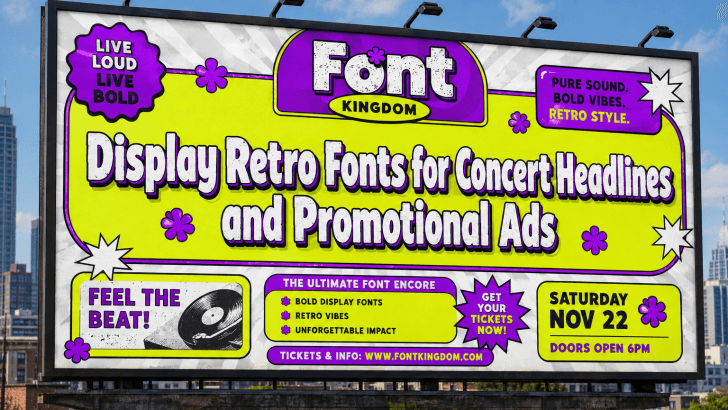
Using display retro fonts for concert headlines and promotional ads is one of the most effective ways to create posters, banners, and campaign visuals that feel energetic, nostalgic, and instantly memorable. Many concert promotions struggle with the same problem: the event may have a great lineup, strong visuals, and exciting information, but the design still feels flat because the typography does not create enough impact.
Concert design needs to capture attention quickly. Whether the poster is displayed on social media, printed as a flyer, placed on a street wall, or used as a digital ad, the headline must make people stop, look, and feel the event’s atmosphere. This is where retro display fonts become powerful.
Retro typography brings personality, emotion, and visual rhythm into promotional design. It can make a jazz night feel classy, a rock concert feel bold, a disco event feel playful, or an indie festival feel artistic. For designers and event promoters, choosing the right retro font is not just a style decision. It is a branding decision that helps communicate the mood of the event before the audience reads the details.
Why Retro Fonts Work Well for Concert Promotion
Concert posters have always been closely connected to expressive typography. From vintage music flyers to psychedelic festival posters, typography has played a major role in shaping the visual identity of music culture. Retro fonts work well because they combine nostalgia with strong visual character.
Retro Fonts Create Instant Mood
Music is emotional, and promotional design should reflect that emotion. A retro font can instantly suggest a specific era, genre, or atmosphere.
For example, bold groovy letterforms can remind people of disco and funk. Rough textured fonts can suggest garage rock or underground music scenes. Soft vintage serif fonts can communicate jazz, soul, or acoustic performances. This emotional connection helps audiences understand the event faster.
Display Fonts Capture Attention
Display fonts are designed for headlines, titles, and short promotional messages. They are not meant for long paragraphs. Instead, they are built to create immediate visual impact. For concert headlines, this is exactly what designers need. A strong display retro font can make the event name become the centerpiece of the poster.
Nostalgia Makes Ads More Memorable
Nostalgia is a powerful tool in design. People often connect retro aesthetics with memories, culture, and personality. Even younger audiences who did not experience the original era often enjoy retro-inspired visuals because they feel warm, expressive, and different from generic modern design. That is why display retro fonts remain popular in music branding, concert posters, album covers, and promotional ads.
The Role of Typography in Concert Headlines
A concert headline is usually the first text people notice. It may include the event name, artist name, music genre, or campaign theme.
Building Visual Hierarchy
Strong typography helps organize information. In a concert poster, the most important elements usually include:
- Event title
- Artist or band name
- Date and time
- Venue
- Ticket information
A display retro font works best for the main headline, while simpler fonts should support smaller details. This creates hierarchy and makes the design easier to read.
Communicating Genre
Typography can signal music genre before the audience reads the full description.
For example:
- Psychedelic retro fonts work well for music festivals.
- Bold slab fonts suit rock and indie concerts.
- Groovy rounded fonts match funk, disco, and dance events.
- Elegant vintage fonts support jazz and acoustic sessions.
When typography matches the music genre, the whole promotional design feels more intentional.
Best Uses for Display Retro Fonts
Display retro fonts are versatile, but they work best when used strategically.
1. Concert Posters
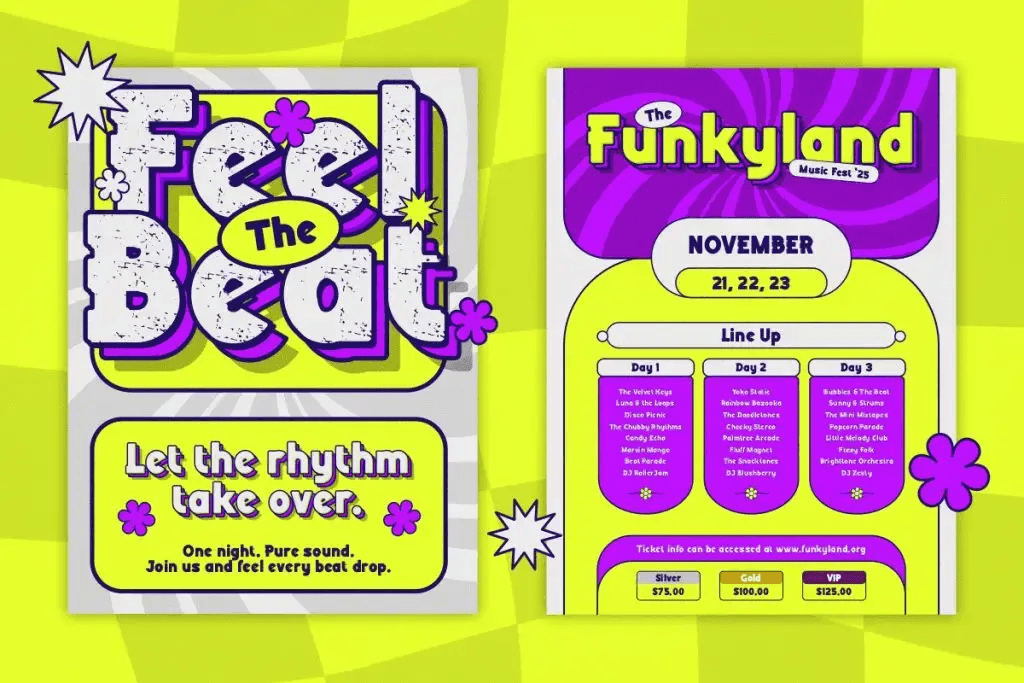
Retro display fonts are perfect for poster headlines because they create strong visual identity. They help the poster stand out in both digital and printed formats. A good poster headline should be readable from a distance and memorable at first glance.
2. Festival Branding
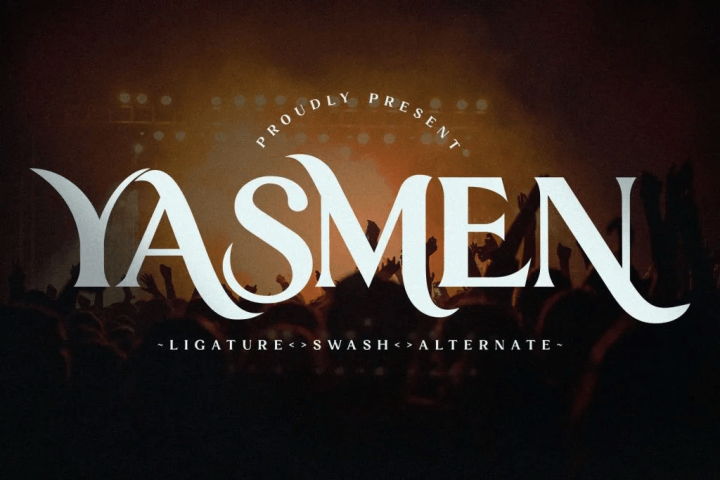
Music festivals often need a complete visual system. Retro fonts can be used across:
- Posters
- Wristbands
- Tickets
- Stage banners
- Merchandise
- Social media templates
Using the same retro typeface consistently strengthens brand recognition.
3. Social Media Ads
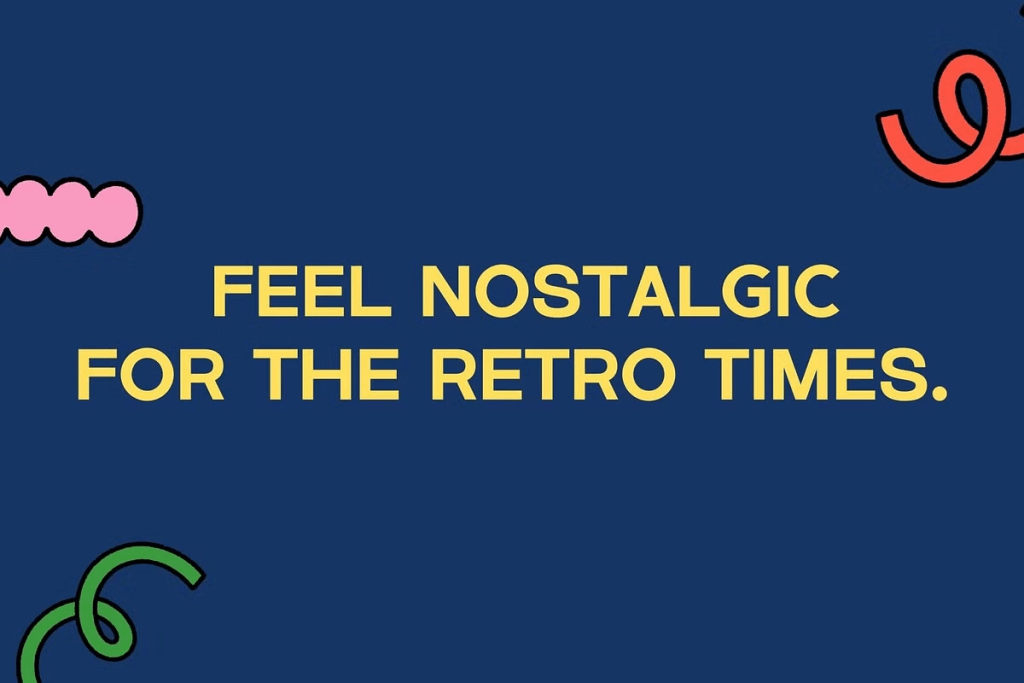
Social media is crowded with promotional content. Retro typography can help an ad look more distinctive compared to clean corporate visuals.
Use retro display fonts for short phrases such as:
- Live Tonight
- Summer Music Fest
- Retro Night
- Indie Concert
- Get Your Tickets
Short messages allow the font personality to shine without reducing readability.
4. Album and Merchandise Design
Concert promotion often extends into merchandise. Retro display fonts work well for T-shirts, tote bags, stickers, album covers, and tour posters. The typography becomes part of the fan experience.
How to Choose the Right Retro Font
1. Match the Font to the Music Style
Before choosing a font, define the music identity.
Ask yourself:
- Is the event energetic or relaxed?
- Is the audience young, mature, or mixed?
- Is the genre rock, jazz, pop, funk, indie, or electronic?
- Should the design feel premium, playful, rebellious, or nostalgic?
The answers will guide your font choice.
2. Prioritize Readability
Retro fonts can be highly decorative. However, concert information must still be easy to understand. Use decorative fonts mainly for headlines. For supporting text such as date, venue, and ticket details, pair the retro font with a clean sans-serif.
3. Consider Color and Texture
Retro typography works especially well with expressive colors and textures.
Popular combinations include:
- Warm orange and brown for vintage posters
- Purple and yellow for disco-inspired design
- Red and black for rock promotions
- Cream and green for old-school festival visuals
Texture can also add authenticity, such as grain, halftone, paper effects, or distressed edges.
Typography Techniques for Promotional Ads
Using a retro font is only the beginning. The way it is applied determines how effective the design becomes.
Use Large Headlines
Concert ads need quick impact. Large typography helps the main message stand out immediately. Make the headline the strongest element in the composition.
Create Contrast
Retro fonts often look best when placed against simple backgrounds. Strong contrast improves readability and makes the design feel cleaner. Use light text on dark backgrounds or dark text on bright backgrounds depending on the mood of the event.
Limit the Number of Fonts
Avoid using too many decorative fonts in one poster. A strong layout usually uses:
- One retro display font for the headline
- One clean font for details
This keeps the design expressive but professional.
Add Spacing Carefully
Some retro fonts have bold or unusual letterforms. Adjust spacing when needed to improve balance and readability. Good spacing makes the headline feel polished rather than crowded.
If you want to improve your promotional design strategy, continue reading related articles on the Font Kingdom Blog. Start with How to Advertise Your Business with Strong Visual Typography to learn how typography can improve digital campaign performance.
You can also explore Action Game Fonts That Add Energy to Your Visual Identity if you want bold, dynamic typography ideas for high-impact visuals. For more font inspiration, visit the Font Kingdom font collection and discover typefaces designed for branding, posters, ads, and creative campaigns.
Conclusion
Choosing display retro fonts for concert headlines and promotional ads can help designers create stronger, more emotional, and more memorable visual campaigns. Retro typography adds personality, nostalgia, and energy, making it ideal for music events that need to stand out.
From concert posters and festival branding to social media ads and merchandise, retro display fonts give promotional materials a distinct voice. When paired with clear hierarchy, readable supporting fonts, strong contrast, and consistent branding, they can transform ordinary event designs into visuals that feel exciting and professional.
For designers, promoters, and creative brands, retro fonts are more than decorative choices. They are storytelling tools that help audiences feel the music before they even hear it.
